
Oral History Collection
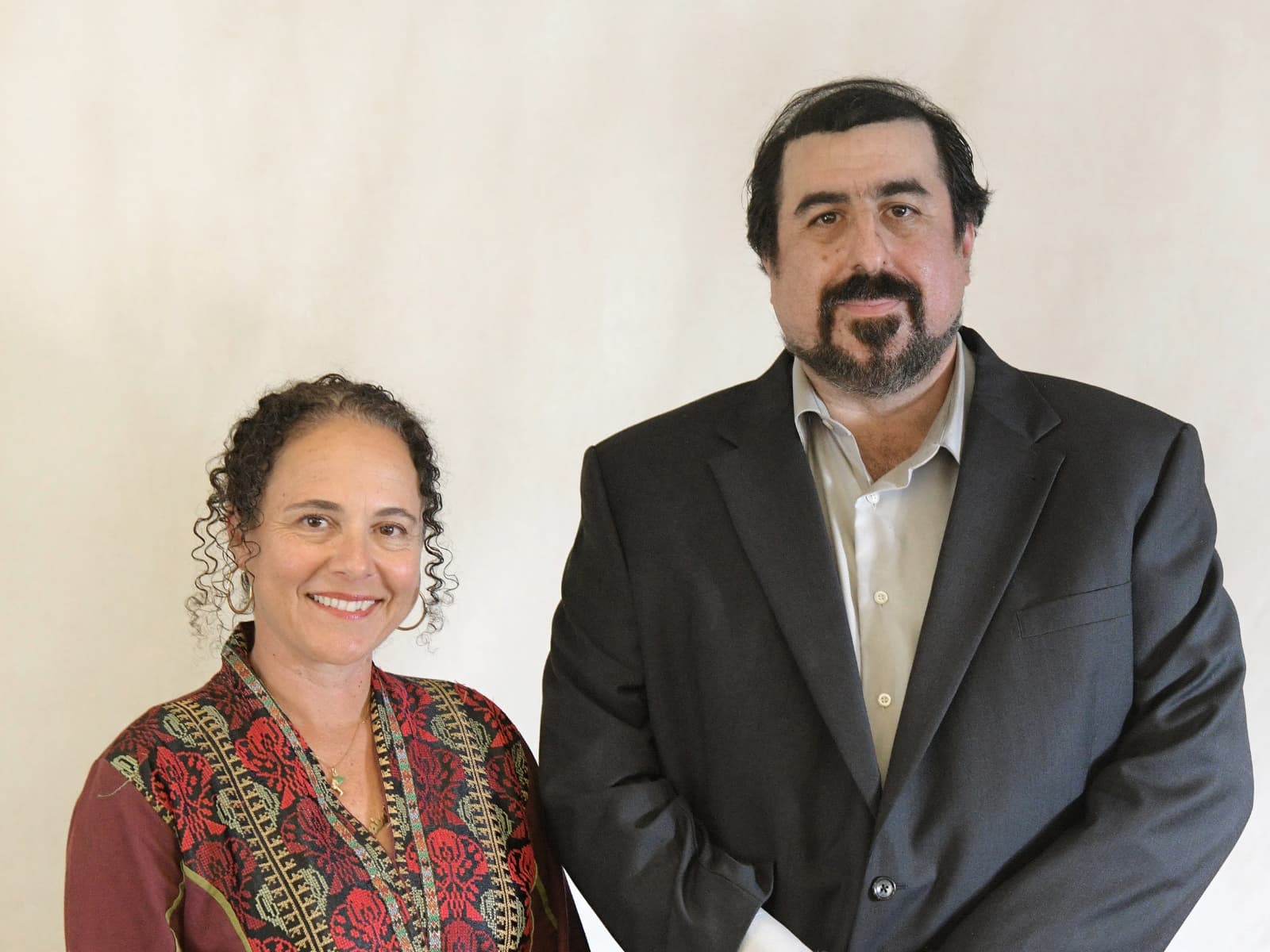
Bassim Wahab
Interviewed by Sandra SarroufRecorded on June 23, 2025Duration 1:06:39Language English
[00:00:00] Sandra Sarrouf: Okay, today is June 18th, 2025 and I'm here with Bassim Wahab for the Mawtini Oral History Project. Um, and just to confirm, Bassim, you give consent to be recorded and have your interview uploaded and part of the digital archive for the project?
[00:00:25] Bassim Wahab: Yes, certainly.
[00:00:26] Sandra Sarrouf: Okay. Awesome. Thank you for doing this, by the way.
[00:00:28] Bassim Wahab: Of course.
[00:00:29] Sandra Sarrouf: So tell, where were you born?
[00:00:32] Bassim Wahab: Myself, I was born in Sacramento, California. But my parents, both my parents are Palestinian. They grew up in the city of Ramallah and the West Bank. I would have to look up the precise cities that they were born in, but it's in that region. And, both my parents, uh, have roots in history in Palestine, and I know somewhere floating around is a family tree and it goes way, way, way back. So no doubt, us Palestinians have been in that territory for not just a few years or decades. We're talking centuries. So it goes way, way back.
[00:01:13] Sandra Sarrouf: Have you seen the family tree or...
[00:01:15] Bassim Wahab: I you know what, I wish there was a sequel to this interview because I'd come back with some more information.
[00:01:22] Bassim Wahab: Definitely. I don't know if we could work out some kind of addendum or something, I don't know. But-
[00:01:28] Sandra Sarrouf: Yeah, if you ever come across it.
[00:01:30] Bassim Wahab: It is the, that family tree is all in Arabic, which is one thing, and then we probably, I want to actually kind of redo it in English and include some other stuff as well. So, definitely extensive family history.
[00:01:44] Bassim Wahab: Each of my mother and father have seven or eight brothers and sisters and, those, so that's my, on my parents' level. And then they had children, which is us, our generation. And our generation now is having children too. So I have hundreds of first cousins. I don't even know them all or have met them all.
[00:02:07] Bassim Wahab: They're all over the world. There's only one family of my father's brother that is still in Ramallah and his, I think all but one of his children and their families is in Ramallah. And then my mother also has some family in Ramallah as well. As far as I know, fortunately we don't have anybody in Gaza, but they're all like in Ramallah right now.
[00:02:35] Bassim Wahab: And everybody else has immigrated elsewhere in the world. Tons of relatives in Canada, Montreal, Sudbury, Calgary, all those places. And then the rest of my family are in Sacramento Bay area. I actually just went to my first Wahab family reunion in the Bay Area in Danville. There was over 100 Wahabs invited and over fifty attended.
[00:03:03] Bassim Wahab: Yeah. There's more, almost more people in my family than there are Palestinians in the Central Coast or even half of California for that matter. So I come from an extremely big family.
[00:03:13] Sandra Sarrouf: Had you met many of the cousins and aunties and uncles that you saw at the reunion?
[00:03:19] Bassim Wahab: What's that?
[00:03:20] Sandra Sarrouf: Had you already met many of them, or was this the first time?
[00:03:23] Bassim Wahab: You know, some of them, the last time I saw was like 10 or more years ago, which is kind of sad. And some of them, uh, for the first time and some of them babies and children that I've never seen before. So yeah, it's kind of sad that I, I still have, you know, gords [sic] of nephews and nieces all over the world, both in the Bay Area and Canada that I haven't seen in person or even talked to yet.
[00:03:48] Bassim Wahab: So there's, there's a lot of catching up to do, but definitely a big Palestinian family, no doubt about that.
[00:03:55] Sandra Sarrouf: And tell me before we get into how you ended up in San Luis Obispo or how your parents ended up in California, you said they were both born in Ramallah.
[00:04:07] Bassim Wahab: City is very close to Ramallah-
[00:04:08] Sandra Sarrouf: In Palestine.
[00:04:09] Bassim Wahab: They grew up in Ramallah. Yeah, in the West Bank. Yes.
[00:04:12] Sandra Sarrouf: And what are some of the stories that they have told you in terms of growing up there or when they're, they decided to immigrate, did they get married in Palestine?
[00:04:22] Bassim Wahab: Right. Well, let, let me go a little bit how that happened. So my grandfather, my father's father, through obviously what was happening, they decided to send my father to America.
[00:04:37] Bassim Wahab: I'm gonna have, I want to, if I, may I ask, can I get back to you with more information or dates? Bexause I'd love to do that. Yeah.
[00:04:44] Sandra Sarrouf: Yeah and we don't need to know a lot specifics.
[00:04:46] Bassim Wahab: No, I'd like to provide it not, I actually like to get it for myself too.
[00:04:49] Sandra Sarrouf: Sure, sure.
[00:04:49] Bassim Wahab: But generally, you know, my dad came here in the sixties, and then obviously, you know, there's, you've heard of the Six Day War in '67, et cetera, et cetera.
[00:05:01] Bassim Wahab: So at that point, you know, it was pretty well decided that, you know, they, that he was gonna stay here. He did actually go back to Palestine to meet my mother and then came back here and got married.
[00:05:15] Sandra Sarrouf: So you mentioned because of the situation your grandfather sent your father.
[00:05:21] Bassim Wahab: Yes.
[00:05:21] Sandra Sarrouf: What do you mean by the situation?
[00:05:23] Bassim Wahab: Well, obviously the war and violence and, sorry, shouldn't say obviously, the war and violence in Palestine in the West Bank.
[00:05:30] Sandra Sarrouf: Okay.
[00:05:30] Bassim Wahab: Yeah. So, so he found my mom, they connected, came back here and got married and here I am [laughs]. In Sacramento.
[00:05:42] Sandra Sarrouf: They got married here in Sacramento?
[00:05:45] Bassim Wahab: In, I think in Sacramento. But yes, here in the States, they basically came to Sacramento and, you know, we got a house in Sacramento.
[00:05:55] Bassim Wahab: They, they were in apartments at first, but they were basically based in Sacramento. And also they brought some relatives on my mother's side and things like that. So we had two families. One, family of first cousins on my father's side, and a another set of family on my mother's side as well, growing up in Sacramento.
[00:06:19] Sandra Sarrouf: And what year were you born, were you born? Or I'm just curious timing of when they, or when did they immigrate? When did your mom immigrate? When, when did they get married?
[00:06:27] Bassim Wahab: They got married in the early seventies.
[00:06:28] Sandra Sarrouf: Okay. That gives us some frame of reference.
[00:06:30] Bassim Wahab: So I came after that. [Laughs].
[00:06:32] Sandra Sarrouf: Okay, perfect.
[00:06:34] Bassim Wahab: Hey, I still have some people convinced I'm pretty young. Okay. So, they came-
[00:06:39] Sandra Sarrouf: So by the seventies they were settled in...
[00:06:43] Bassim Wahab: Yeah, they were here, they settled in, married, they had an apartment. The house that we bought in Sacramento was purchased in the seventies and it went from there. So.
[00:06:56] Sandra Sarrouf: And do you have any siblings?
[00:06:59] Bassim Wahab: I do have a, so my parents are deceased now from natural causes. I do have a brother and a sister. Very sadly, I haven't mentioned to many people. My brother did pass away. He committed suicide a couple years ago. That was definitely a horrific experience. You don't want to go through that. He hung himself.
[00:07:22] Sandra Sarrouf: I'm sorry to hear that.
[00:07:23] Bassim Wahab: Yeah. So, and, I'm not in contact with my sister really, for the most part. So, we had some issues. There was, you know, domestic violence in my family and a lot of fighting then between, you know, my mother's and father's side of the family, which created a bunch of separation, et cetera, et cetera.
[00:07:47] Bassim Wahab: Part of the reason why I'm not super well connected with everyone, but we're slowly, you know, getting there. Yeah.
[00:07:56] Sandra Sarrouf: What are some early family memories? Do you have any? As a child?
[00:08:01] Bassim Wahab: Oh gosh. No, nothing. Nothing in particular.
[00:08:05] Sandra Sarrouf: Playing? Eating?
[00:08:08] Bassim Wahab: No. But I-
[00:08:09] Sandra Sarrouf: School?
[00:08:10] Bassim Wahab: I do wanna say, growing up, you know, definitely very much immersed in the Arab community. In Sacramento there was the Arab American Club of Sacramento, so I was very used to going to a number of events there and being with other Arab people. My father was a Roman Catholic and my mother was Greek Orthodox Melkite Catholic. And so we went more to the church of my mother's choosing. My dad didn't like that. And so there we got to kind of mingle with the Arab community as well.
[00:08:45] Sandra Sarrouf: Was there a, so I'm hearing there was a large Arab community-
[00:08:47] Bassim Wahab: Large Arab community in Sacramento.
[00:08:49] Sandra Sarrouf: And was it a multi-ethnic Arab community? Were there a lot of...
[00:08:52] Bassim Wahab: Yeah. I think so. My family, so as I'm saying, both sides of my family are actually Christian. And what, what you we experience here is a large Muslim community. So I was actually part of a larger Christian community. Actually there was two Arab, at least two Arab Christian churches in Sacramento. And there's probably more right now, I think there's several. So, immersed in, definitely in an Arab culture and kind of a mix too.
[00:09:25] Bassim Wahab: You know, to me I always saw it as we're all Arabs, whether we're Palestinian or Lebanese or Egyptian or whatever. And there wasn't really a, "Oh, you're Muslim or Christian" kind of thing. That wasn't a thing. It was like we were all together.
[00:09:38] Sandra Sarrouf: Yeah. And tell me about what, when you say you were immersed in Arab culture, what does that-
[00:09:46] Bassim Wahab: Yes.
[00:09:46] Sandra Sarrouf: What does that mean to you?
[00:09:47] Bassim Wahab: The events, the haflas or parties, as we call them, weddings. It was a lot more of that when I was a kid, you know, it was kind of like I would go to a wedding or hafla a couple times a year, you know, so I was with other Arabs, you know, we'd go to the Bay Area, you know, weddings in our family, everything.
[00:10:06] Bassim Wahab: So it was a very social scene when it came to mixing with other Arabs. Quite different than what I've experienced here, but I guess we could get to that later on.
[00:10:19] Sandra Sarrouf: And what about in school?
[00:10:21] Bassim Wahab: Yes, school. Actually, I do wanna talk about my experience. It was a negative experience.
[00:10:31] Sandra Sarrouf: And like as a child?
[00:10:33] Bassim Wahab: As a child.
[00:10:34] Sandra Sarrouf: In elementary school.
[00:10:34] Bassim Wahab: In elementary school, and to middle school and to high school. More so in elementary school, but definitely at all levels. Elementary school was the worst. I was always made fun of, picked on, had no friends. The, basically the outsider that got bullied and treated like absolute crap, absolute crap.
[00:10:56] Bassim Wahab: It was terrible. It was the worst thing in the world. Would never, if somebody said, everybody get in groups, nobody would want to get in a group with me. All that stuff. So the extreme end of a bad experience and being treated poorly, having no friends, everybody looked down on me, et cetera. Like on a scale of one to ten, it's zero, like the worst.
[00:11:19] Bassim Wahab: What's interesting was it really wasn't til later on in life did I realize that a large part of this was due to the fact that I was Middle Eastern and that people in those schools couldn't connect and relate because I would often ask myself, wait a second, how come at school I have no friends and everybody treats me like crap, but if I go to church or to this function with Arabs or whatever, they don't treat me like that. They treat me equal. And that started, you know, things started put together in my mind, well these are racial, these are discrimination issues. So that I kind of, you know, took me a while to put things together and figure that out.
[00:12:05] Sandra Sarrouf: Yeah. And that happens a lot in our adult lives. And we are able to, when we have the literacy or to even understand what racial discrimination is.
[00:12:14] Bassim Wahab: Exactly, exactly.
[00:12:15] Sandra Sarrouf: As kids, we don't see it.
[00:12:17] Bassim Wahab: And if I may add on to that, then you mentioned with teachers, so yes, I've had some good teachers. I've had few instances. And really racism is at its worst when it's not so, you know, people aren't using racial slurs and things, they just treat you a certain way. But there were times where it was outright, you know, racism. I had one teacher in high school and what was interesting about this guy is most of my teachers knew my parents. By the way, my parents were both teachers. They were math teachers in the Sacramento City Unified School District, and they taught each of them over twenty years. So most, a lot of the teachers that I had actually knew my parents. So it was kind of weird going to school. But, and this was a teacher that even knew my parents, so I was kind of surprised.
[00:13:07] Bassim Wahab: But he treated me like absolute crap. He picked on me. And at one point he said, "So did you put on your UC application Palestinian terrorist?" And I'm like, wow, that's kind of pretty blatant. And what was also unfortunate about that teacher was, the second, two semesters, the second semester he was picking on me and treating me like crap the whole time.
[00:13:29] Bassim Wahab: But the first semester he was picking and treating like crap, a black kid, the only black kid in the classroom. I'm like, this is pretty overt racism and discrimination here. I had a teacher at Sacramento City College. He came to me during group work and he said, you know, I noticed that you're not looking or talking to that female over there.
[00:13:51] Bassim Wahab: Is that because of your Arab culture? Or something like that? And I'm like, that's kind of a slanted remark there. But interestingly before, earlier in the class, he said, he goes, you know what the most militant group on campus is? It's black females. I'm like, that's like a pretty racist remark.
[00:14:09] Bassim Wahab: You know? You know, how do they get away with that? And then even at, and when I was... So by the way, I went to Sacramento City College, and then I transferred obviously to Cal Poly. Got my degree in mechanical engineering.
[00:14:21] Sandra Sarrouf: You went from elementary school where you felt really isolated?
[00:14:25] Bassim Wahab: Yes. Oh, definitely.
[00:14:26] Sandra Sarrouf: And later in life, you felt this was a direct reflection of being different than the other kids?
[00:14:31] Bassim Wahab: Yes.
[00:14:31] Sandra Sarrouf: Or the kids not being able to relate to you.
[00:14:32] Bassim Wahab: Oh, definitely.
[00:14:33] Sandra Sarrouf: And did you see that trend happening in middle school or high school? Were there not other Arab kids in school?
[00:14:38] Bassim Wahab: Uh, not many. Not many.
[00:14:39] Sandra Sarrouf: Not many?
[00:14:40] Bassim Wahab: Not many. But I, I think there was a great improvement from high school to Sacramento City College because at Sacramento City College, it was a far more ethnically diverse campus. And so that treatment wasn't nearly as bad. And I think there was a lot different people that I could relate to. I was part of MESA [Middle East Studies Association], you know, so that was a mixture.
[00:15:03] Bassim Wahab: But let me just mention, sorry. I was on the track there of, you know, how I experienced racism from teachers in high school, Sacramento City College, and even Cal Poly at times, and it's far worse than it is right now. But, you know, when they would joke about things like the Iraq War, I'm thinking to myself, wow, I'm surrounded by a bunch of professors here that are invested and have their, you know, their eyes set on, you know, bombing Iraq.
[00:15:33] Bassim Wahab: I'm like, maybe this isn't the best, you know, racial environment for me, considering that everybody here wants to kill and eliminate Arabs. So there was def-
[00:15:43] Sandra Sarrouf: When did you come, when did you come to Cal Poly? You went from Sac, you went from Sacramento City College to Cal Poly San Luis Obispo?
[00:15:48] Bassim Wahab: Yeah, so I was a junior transfer? Yes.
[00:15:50] Sandra Sarrouf: Okay.
[00:15:50] Bassim Wahab: Yes. Yeah.
[00:15:51] Sandra Sarrouf: Is this in the wait, in the nineties? In the-
[00:15:57] Bassim Wahab: Yeah, the turn of the century.
[00:15:59] Sandra Sarrouf: Okay. To give perspective.
[00:16:00] Bassim Wahab: Yeah.
[00:16:00] Sandra Sarrouf: Then and now.
[00:16:01] Bassim Wahab: Right.
[00:16:02] Sandra Sarrouf: Shifts.
[00:16:02] Bassim Wahab: Yeah. And we, if we have time, we could talk about what's happening now. So I experienced, you could say there was racism, discrimination as a kid. From my peers. And then even beyond that, some instances, you know, in high school, junior college and the University of Cal Poly, you know, at, at a later age, even when it wasn't coming from my peers, but there was also times with my peers at Cal Poly where I couldn't work with groups and people would just single me out and treat me as if I'm fresh off the boat or something like that.
[00:16:34] Bassim Wahab: Yeah. And I even had a, my chemistry teacher at junior college was, acted, talked to me in way as if I couldn't understand the instructions in English or something like that. So definitely, definitely I experienced racism and discrimination throughout my life. Growing to school.
[00:16:48] Sandra Sarrouf: How did they know you were Palestinian?
[00:16:51] Bassim Wahab: Facial appearance.
[00:16:53] Sandra Sarrouf: Or just Arab, they just assumed...?
[00:16:53] Bassim Wahab: I unfortunately had a mustache since I was a very young kid.
[00:16:57] Sandra Sarrouf: So they would just assume-
[00:16:58] Bassim Wahab: Yeah.
[00:16:58] Sandra Sarrouf: Some Arab. Did any-
[00:16:59] Bassim Wahab: Yeah.
[00:16:59] Sandra Sarrouf: Did any professors ever ask you or engage?
[00:17:06] Bassim Wahab: The ones that were discriminatory towards me. No, but there were some professors that were nice to me, because I was a Arab, you know, and some of them, there was an Egyptian professor at my teacher at my high school that knew my parents and a Greek professor.
[00:17:22] Bassim Wahab: So they were friends with us and that was cool because they treated me, you know, I walked into my geometry class, "Marhaba, ya Wahab." You know, it was an Egyptian guy, so he knew me and my parents and everything. Yes.
[00:17:33] Sandra Sarrouf: And your name of course is very, your name is very Arab.
[00:17:34] Bassim Wahab: So obviously I got treated very well from a few teachers that were either Middle Eastern or respected Middle Eastern people, or knew my parents and then it was the opposite.
[00:17:46] Bassim Wahab: And so, yeah, it took me a while to realize that there's a racial, you know, aspect to all of this.
[00:17:52] Sandra Sarrouf: And you were at Cal Poly for two years?
[00:17:55] Bassim Wahab: I was at Cal Poly, so I got a degree in mechanical engineering, which takes a while. It's at least five years even if you start at Cal Poly. So it was about two and a half years at Sacramento City College and three and a half years total at Cal Poly, including some co-ops and time off there.
[00:18:14] Sandra Sarrouf: And did you find any other community, like now there's groups on campus. Were there any-
[00:18:19] Bassim Wahab: Nothing.
[00:18:20] Sandra Sarrouf: Arab American groups, Palestinian groups?
[00:18:23] Bassim Wahab: I was not involved in any of that until recent.
[00:18:26] Sandra Sarrouf: Nothing existed and how-
[00:18:28] Bassim Wahab: It did, oh, wait. After I graduated, there was a Students for Justice and Peace in the Middle East that I was a part of as an alumni. But that was after I graduated. Not much happening while I was a student.
[00:18:45] Sandra Sarrouf: And, it sounds you grew up immersed in the Arab culture, and so-
[00:18:50] Bassim Wahab: Yes, definitely.
[00:18:52] Sandra Sarrouf: You learned how to probably navigate two worlds, right? Your Arab world, and then your American world.
[00:18:58] Bassim Wahab: Mm-hmm. Exactly.
[00:19:00] Sandra Sarrouf: And tell me more about how did your parents and families instill or sustain the Palestinian story and Palestinian heritage?
[00:19:09] Bassim Wahab: Right. That's a good question. Yes and no. So my, a different perspective and outlook between my mother and father. My father was more like, okay, that's it. You know, obviously the 67 wars have done and we lost and that was it. Like, throw in the white flag, it's done. We're not gonna get Palestine back.
[00:19:35] Bassim Wahab: This is, you know, so he didn't really even mention much about our history or culture. He just, to him that was wiped off the slate. He didn't really care or want me even to learn Arabic. He just wanted me, he wanted us to get good grades in school and that was pretty much it. My mom on the other hand, was very different.
[00:20:01] Bassim Wahab: Very different from my dad's perspective. She wanted us to learn Arabic, she wanted us to get immersed in the culture. She wanted us to go to an Arabic church and things like that. So, it was coming from two different perspectives. And I'd imagine that's probably the case with a number of Arab children these days.
[00:20:17] Bassim Wahab: Their parents have mixed views, focus on school, you know, try to keep your heritage and culture going. And it was kind of like that with my parents. Obviously my father being more dominant. We had to focus more on school and having fun or going, you know, going to, you know, yes, if there was an Arab event or a wedding in our family, we definitely would go.
[00:20:38] Bassim Wahab: But outside of that, you know, there wasn't anything about, oh, you need to try to keep the culture alive or anything like that.
[00:20:44] Sandra Sarrouf: From your dad's side?
[00:20:45] Bassim Wahab: Yeah, from my dad's perspective.
[00:20:48] Sandra Sarrouf: Yeah. And did they share any stories about living in Palestine with you?
[00:20:52] Bassim Wahab: Not really.
[00:20:53] Sandra Sarrouf: Not your mom?
[00:20:53] Bassim Wahab: No. No.
[00:20:53] Sandra Sarrouf: Or how about your grandparents? Were you in touch with your grandparents?
[00:20:56] Bassim Wahab: Definitely not my father. My mother a little bit. My mother kind of referred to Ramallah, kind of like, I don't know if you remember the show, Perfect Strangers. [Laughs.] Okay, you don't remember that? It's from, eighties, nineties.
[00:21:10] Sandra Sarrouf: I probably just didn't watch it.
[00:21:10] Bassim Wahab: It was a popular show. But anyways, there was a character who was from a mythical place called Mypos, where, you know, kind of very traditional cultural kind of thing.
[00:21:20] Bassim Wahab: And that's kind of how my mom referred to Ramallah. She would always say, oh, in Ramallay we did this. We did, we cooked things this way. We lived this way. On Sundays, we went to go visit our family and relatives and things like that. So, she was a lot more traditional and cultural obviously than my father.
[00:21:36] Bassim Wahab: Not really many stories. I would say even my uncle on my mother's side was kind of closer to my father. Like, "Oh, just come to this country and make money" or something like that. I do have one relative, an uncle. And actually my mother's and father's family are somehow connected. It's really weird. Let me tell you an interesting story actually.
[00:21:59] Bassim Wahab: A year ago, when we were having the family reunion in the Bay Area, I actually arrived to San Jose slash Milpitas like a little past midnight. And when I got there, I realized that my family was going to church because it was actually, we did it purposely on Easter Sunday or Easter weekend. So at that point in the Orthodox Christian tradition, they actually have their mass, not Sunday morning, but Saturday night.
[00:22:30] Bassim Wahab: So when I arrived, they were all at church. And I arrived at church and I was literally like in the middle of the church sermon, which, and it's very long in Orthodox Christians, it's like at least two hours. So from like midnight to 2:00 AM or longer. Went to that liturgy. And then at the church hall we had dinner after that, at like 2:00 AM or something like that.
[00:22:53] Bassim Wahab: So it was pretty interesting. And my Uncle Francis, fortunately was there. I'm happy that he's still alive and was like, oh, here's this guy here. And I don't remember they're like, "Oh, this guy is your mother's uncle's cousin," whatever, blah, blah, blah, blah. But it was kind of interesting because when he talks, it's almost like listening to like stories from the Bible in historical times.
[00:23:15] Bassim Wahab: Like, these people go way back in Palestine or something like that. So that was pretty cool. But actually my parents' families are connected somehow. And then there's this, another family, Nijma family, that's in between them. So my Uncle Francis that I used to visit while I was living in the Bay Area, when I had a co-op, I used to go visit him every time.
[00:23:38] Bassim Wahab: And he is all stories. All stories. And his family doesn't even think that he's like with it right now, because all he could think about is the past. And so he talks about family stories in Palestine, biblical stories, all of this. Just stuff, just story, story, stories, I wish we could interview him, he'd be far more interesting than I am. And, not too much.
[00:23:59] Bassim Wahab: And that's actually where I learned that my grandfather, my mother's father passed away. His bus was bombed from the Israelis, for no apparent reason. And, he talked about the type of person, he was a good person. Everybody in the community respected him. And so that's where all the stories come from. But not too much circulating in my family.
[00:24:22] Sandra Sarrouf: Yeah.
[00:24:23] Bassim Wahab: It's all from my Uncle Francis.
[00:24:24] Sandra Sarrouf: And I'd imagine there's a lot of grief associated, right? With having to leave Palestine, the bombing-
[00:24:30] Bassim Wahab: Right.
[00:24:31] Sandra Sarrouf: How you mentioned, you know, Israel bombed the bus and just-
[00:24:33] Bassim Wahab: Yeah.
[00:24:34] Sandra Sarrouf: Knowing that was happening and so, was that ever shared?
[00:24:38] Bassim Wahab: You know, not really. And I, I think my family, and this is common, especially with families, I've noticed Palestinian families here. Is that [coughs]. Gimme gimme one second. I'm just gonna...
[00:24:50] Sandra Sarrouf: Yeah, of course.
[00:24:51] Bassim Wahab: I lose my voice really quickly. Okay, great. So yeah, I, what I've noticed with many of these Palestinian families here is obviously they came here to escape and to get a better life.
[00:25:04] Bassim Wahab: And so I feel that a lot of them, particularly as I was just talking about my dad and my mother's brother, that uncle, wanna put that away. They wanna put that aside. They're like, that's it. We've lost, you know, start a new life here and put all of that behind you and focus on success here. And I can understand that to an extent.
[00:25:30] Bassim Wahab: But also at the same time, I think what's unfortunate in that philosophy is that you lose your sense of culture and tradition and carrying things over here.
[00:25:39] Sandra Sarrouf: Sense of place., maybe.
[00:25:40] Bassim Wahab: Mm-hmm.
[00:25:42] Sandra Sarrouf: And-
[00:25:46] Bassim Wahab: So yeah, we talked about school.
[00:25:48] Sandra Sarrouf: Okay. So, yeah, thank you for sharing all of that. And so you've kept from your mom's side, just knowing you, right, there's a lot of pride and joy and effort in maintaining the Palestinian story and culture and history. And so tell me, you, you spent two and a half years at Cal Poly. You had these-
[00:26:13] Bassim Wahab: Three and a half.
[00:26:13] Sandra Sarrouf: Three and a half, sorry. You had these-
[00:26:15] Bassim Wahab: Well, including co-op and-
[00:26:17] Sandra Sarrouf: Okay.
[00:26:17] Bassim Wahab: Eight, nine months off.
[00:26:18] Sandra Sarrouf: Those experiences and so. And then you had mentioned you became an, as an alumni, you got involved with maybe the first group that was for students for justice in the Middle East. And so what happened with your life, and you decide, and you're still here. So I'm assuming you stayed, since you graduated in the area.
[00:26:38] Bassim Wahab: Yes, I have.
[00:26:39] Sandra Sarrouf: And what prompted you to do that? Work? You wanted to be here?
[00:26:43] Bassim Wahab: Yes. Let me go back to the other thing you said just to describe myself. Yes. I have, between my father and mother. So it's like my father represents the practical world, you know, get a good job, make money and all that stuff. And to me, my mother naturally the feminine side, you know, carry on culture, tradition. And I think you've mentioned that yourself, that tends to come from that side.
[00:27:06] Bassim Wahab: And so I kind of take on some of both, but definitely a lot of things I'm getting from my mother's side in terms of not just pride, but a strong sense of, of wanting and needing to carry on the tradition and culture. And also my mom was also involved in a lot of community work, so she would always like cook Arabic food for the church and stuff like that.
[00:27:33] Bassim Wahab: My dad wasn't too hot about that, but she was definitely connected on that side. And so that's kind of how I look like how I want to be, like I want to be a community person. I want to carry on Arabic culture and tradition and things like that and find a way also to contribute to the community. So I definitely am taking a lot, a lot of my mother's traits, you know, in terms of community work and things like that.
[00:27:57] Sandra Sarrouf: I'm curious, and you might not have an answer to this off the top of your head, but when you say Arab culture, what's one thing that pops to mind? An image or a-
[00:28:07] Bassim Wahab: See, there isn't that one.
[00:28:09] Sandra Sarrouf: Like, is there a food or a way-
[00:28:11] Bassim Wahab: Because it's, it's-
[00:28:11] Sandra Sarrouf: You know, I think of my mom, like the way she speaks or the way she cooks in the kitchen, or-
[00:28:17] Bassim Wahab: It's all of that, it's all of that, food, food, music, culture.
[00:28:21] Bassim Wahab: But then there's also the aspect, you know, that we call this the holy land. So there's also, you know, the religious and the way of life that, unfortunately is being lost because the Arabic, holy religious way of life is almost opposite to what we experience here in the American Westernized society too.
[00:28:43] Bassim Wahab: So it's all of that. I don't know if there's one thing, if I could think of one thing that pops in mind, but to me it's kind of the sum of everything.
[00:28:49] Sandra Sarrouf: No, it's a, a feeling of, yeah.
[00:28:51] Bassim Wahab: Right.
[00:28:52] Sandra Sarrouf: All right. Yes. So tell me-
[00:28:53] Bassim Wahab: And then, ah, well, [laughs] a lot of, I would say complacency. So I wouldn't consider myself successful career wise, you know, because I have a degree in mechanical engineering and I've done some mechanical engineering work, but it hasn't been a regular thing. So, right now I'm basically hustling what I would call two side jobs. You know, I do Uber driving at nights and weekends, and then during the week I have my own tutoring service.
[00:29:26] Bassim Wahab: So I tutor students, primarily Cal Poly students, but other students as well. And so, it keeps me busy. We just finished finals week last week, but up to that point my schedule was super busy because, you know, I'd have tutoring during the day, I'd have, fit in some Uber driving, had Arab Music Ensemble practice twice a week and then all the activism in the morning and night just ate up my time like crazy. So, I've been super busy...
[00:29:58] Sandra Sarrouf: Activism of what?
[00:30:00] Bassim Wahab: Activism. So, as you know, I tried to launch various Palestinian groups here, not with much success. So they kind of rose and fell and, it's a lot... Outside of just having events or going to protests, it's a lot of work in communication, in emails, trying to connect with people, connecting people with here in San Luis Obispo but then even, you know, I've gone out reaching to, you know, you've heard of the Tri Counties Palestine Solidarity Network, which was a group I founded with others. And a lot of those people are in the Santa Barbara area, some to Ojai and Ventura. But I'm also connecting with other Palestinians and Palestinian leaders across the state.
[00:30:47] Bassim Wahab: For instance, when we had, when the Arab Music, Cal Poly Arab Music Ensemble performed in Monterey, I actually went to a Palestinian event that later, that same day in that exact same city. I actually played the viola, a few songs, "Mawtini," I played "Mawtini."
[00:31:01] Sandra Sarrouf: Wow.
[00:31:02] Bassim Wahab: And another song too. So yeah, I have connections, connecting people throughout the state, but it's very time consuming.
[00:31:11] Bassim Wahab: You know, just to write an email, you know, you want a well written email that takes an hour or two, you know? And so I could, you know, constantly having, you know, three, four, five emails that I need to write in my [queue], but I could only get to, you know, one or two a day. So it's a very time consuming thing.
[00:31:27] Sandra Sarrouf: And is this activism, what is it about to educate people about Palestine? Is it about current context? What's your driving force?
[00:31:36] Bassim Wahab: All of the above. And I think we're still figuring that out. One of them-
[00:31:40] Sandra Sarrouf: But for you, Bassim, what's like-
[00:31:42] Bassim Wahab: Yeah.
[00:31:42] Sandra Sarrouf: What's your driving force to do this?
[00:31:44] Bassim Wahab: Oh, yes, yes. Let me mention one other project. So one thing the Tri Counties, group did was the Carbajal letter. And so that letter was delivered in all three counties at his offices. So one, one in San Luis, one in Santa Barbara, one in Ventura, a year after the October 7th date. And that actually earned us some interest on their side.
[00:32:13] Bassim Wahab: So we had a meeting with Salud Carbajal's foreign affairs staff, few months ago, and that was tons of preparation, not even so much on my end, but other people put tons of work, preparing documents and stuff like that. So that was a major project that the Tri Counties group went on.
[00:32:32] Bassim Wahab: My driving force is just, my own personal, Palestinian and Arab pride and also understanding that, I think to myself, obviously those people in Gaza are going through a lot of suffering. I think the pain is beyond human comp, our human comprehension. And if I were in their shoes, which I'm not, they would expect me, us, our Palestinian counterparts in the US and other places to be giving absolutely a hundred percent effort to help them out.
[00:33:13] Bassim Wahab: And oftentimes, you know, I'll hear them crying on videos, "Please stop the bombing, please stop the bombing." And I wish I could respond to them saying, "If I could, I would. But I don't have the power, but I'm going to do the best that I can."
[00:33:27] Sandra Sarrouf: Yeah. Thank you. And where else have you found, you said you joined the Arab Music Ensemble. Has that been a place of connection? Is it personal music, is it-
[00:33:45] Bassim Wahab: Not exactly. And I don't know how much we should keep this on... No, no, no. That's fine. That's, I mean, we'll probably, maybe.
[00:33:51] Sandra Sarrouf: Or what draws you to the Arab Music Ensemble?
[00:33:53] Bassim Wahab: I'm Arab.
[00:33:53] Sandra Sarrouf: Just being part... Right. So of course.
[00:33:55] Bassim Wahab: I started playing viola, in what, fifth grade and, was in my high school orchestra, and we played all the major symphonies. And so when I found out that there was an Arab music on the song, I went to a concert. I'm like, please, I should join this. You know? And so I did.
[00:34:14] Sandra Sarrouf: Yeah. And it's been a place where it seems like a lot of the Arab community goes to the concerts and watches.
[00:34:21] Bassim Wahab: They go to the concerts. Yeah. I have, you know. Yeah.
[00:34:27] Sandra Sarrouf: And, tell me about with all your activism, right, and the beautiful sentiment you just shared around what's happening in Gaza and the desire to do something. How have you felt like the community or government or cities or Carbajal have responded during these times? Have you felt supported?
[00:34:50] Bassim Wahab: The government?
[00:34:51] Sandra Sarrouf: Yeah. By the people in power, by the, in general, right?
[00:34:55] Bassim Wahab: Oh, definitely not.
[00:34:56] Sandra Sarrouf: Okay.
[00:34:56] Bassim Wahab: All throughout, at every level, right? Like for instance, I mean, you know, I think Carbajal is, I don't mind saying this, is absolutely evil and corrupt. And so, can I say that? I don't mind saying that, if you don't mind me saying that. And the same thing with Dawn Addis. I think right now a lot of people, especially, I'm sure if you've heard of Code Pink and what Marcy and Carolyn are working on is opposing the AB, I don't even remember 714 or 715 bill and all of that other stuff.
[00:35:28] Bassim Wahab: Actually I was at a Better Together luncheon, which was a gathering of all the non-profit groups and lo and behold I went to go sit with my friend Steven Vines and lo and behold sitting across the table was Dawn Addis. And so she came up to me afterwards, she kept on, she came up to me afterwards and we had a long talk and she said, "Yeah, you know, let's, you know, we'll have a meeting and talk about these issues."
[00:35:52] Bassim Wahab: That meeting has not occurred yet and I emailed the office. So, and then I think it was soon after that, that they put the bill out there. But, I think it's evil and corruption at all levels. Carbajal's people, Dawn Addis's people. And definitely even I'm very disappointed in the local Democratic party because even though they signed a ceasefire resolution, they're supporting Carbajal and Addis and all of these, you know, pro-Israeli people.
[00:36:20] Bassim Wahab: So it's bad at all levels. The city resolution ceasefire resolutions that you may be aware of, and there were various versions of them and there is some good points of stuff that should have been left out.
[00:36:34] Bassim Wahab: Like we can't control, you know, Israel or the Palestinian government or foreign governments or foreign groups like that. But the city didn't really seem to show any care for residents of Palestinian Arab and Middle Eastern descent. And that's what was disappointing. I think there was another Palestinian lady that pointed that out.
[00:36:57] Bassim Wahab: And yeah, we didn't seem to get much recognition there until this recent, you know, Muslim Awareness Month, that came out recently. So at all levels. And then we also met with the Board of Supervisors. I think Dawn Lee Ortiz [Dawn Ortiz-Legg] was the only one that sympathized for the Palestinians. And if you read all the other statements from the board of supervisors, it is just like, you know, they're so pro-Israeli, anti-Palestinian.
[00:37:25] Bassim Wahab: It's just like, you know, they don't care. So yeah, we don't have high expectations from government.
[00:37:32] Sandra Sarrouf: And have you felt, with everything going on in your activism, in current context as an Arab, as a Palestinian American here, you know, I know just what others have shared for me, feeling less safe or less supported or maybe in some instances with community members feeling seen and heard. What's been your own personal experience?
[00:37:55] Bassim Wahab: No I personally yet have not felt unsafe. I do wanna share one incident that occurred. It didn't occur here, it occurred somewhere else. Can I still share it?
[00:38:09] Sandra Sarrouf: Sure.
[00:38:09] Bassim Wahab: So there was Palestinian week at UC Davis several years ago, and I went to attend that. And when I went to attend, people were telling us, they're like, don't take pictures and post them on Facebook because they'll, you know, find who you are, you know, and all that stuff. There, there was actually a lady there and maybe a few people that fully admitted that I'm with IDF, I am here to report, to gather information, et cetera, et cetera.
[00:38:38] Bassim Wahab: They had a conversation with her and everything. So the lady from the IDF was there, there may have been more people and so they said not to take pictures. And yeah, it was very blatantly obvious that the events for Palestinian week were being monitored by people working for Israel to some extent.
[00:39:02] Bassim Wahab: And what was interesting was I actually got a call from the IDF like a day or two after that week. So somehow, I don't know if they put my picture out on Facebook or something like that, but they got a hold of me.
[00:39:16] Sandra Sarrouf: The IDF got a hold of you?
[00:39:18] Bassim Wahab: Mm-hmm.
[00:39:19] Sandra Sarrouf: Saying what?
[00:39:21] Bassim Wahab: Not much. They left a voicemail message and they said to call back, but I never called back obviously.
[00:39:28] Bassim Wahab: So, but at that point I knew that every Palestinian student, if not Arab student, is monitored. At every CSU and UC. And that's pretty, I think a lot of people have surmised that at this point. So, but, I haven't yet felt scared of any repercussions of my activism. I have not gotten arrested. I haven't really had issues with the police or anything like that.
[00:39:59] Bassim Wahab: My encounters with the police have been actually good and not bad. I think that depends on, you know, how you approach and all that other stuff.
[00:40:11] Sandra Sarrouf: Yeah. And, so you're involved in the Arab Music Ensemble, you're involved, you've spoken a lot about church and the importance of church. Have you found that community here as well?
[00:40:24] Bassim Wahab: So, another incident that happened recently, unfortunately, is there was an IDF soldier giving a speech. At a Christian church, the Healings Rooms in Santa Maria. And so a bunch of us from the Tri Counties group went to go protest there and some others. And right when the IDF Soldier and I was protesting outside, I wasn't actually in the church right as he was starting to speak, some people tried to raise their hands and speak. A couple young ladies, one of them was immediately jumped by three to five, supposedly security officers and violently, aggressively tackled her, held her. They said they almost pulled her arm out of her socket. She came out of the church with her nose bleeding. This is from a Christian church. I kid you not, these people are beyond evil.
[00:41:21] Bassim Wahab: Beyond evil. And what they did was horrific. And unfortunately we didn't, we want to come out to the newspapers about what happened at that church. But you know, there was issues of how to do it, retaliation, et cetera, et cetera. So we never came public about that, but, my experience unfortunately in the Christian church here was pretty negative because I was a part of Mountainbrook and there was definitely anti-Middle Eastern sentiment there.
[00:41:52] Bassim Wahab: People in my own Bible study group, you know, saying that we should bomb and go to war the Middle East, some people, one of them said I was a terrorist. Some of them said they support Israel and against you. So there is so much anti-Middle Eastern sentiment in the Christian churches that I were part of here, I decided to just completely leave the Christian churches here. I still call myself a Christian, but I go to the Mosque Nasreen, and I mingle more with my Muslim brothers than I do with any Christians here. They are, unfortunately too deceived, and I don't think they could socially work with Middle Eastern people. Unless it's a Middle Eastern Christian church.
[00:42:36] Sandra Sarrouf: And yeah. So you've been, so you've found community or connection through the mosque and-
[00:42:45] Bassim Wahab: Something. Better than what it was before. We'll put it that way.
[00:42:48] Sandra Sarrouf: Yeah. And have you ever been back to Ramallah or Palestine?
[00:42:53] Bassim Wahab: I did go in '92.
[00:42:56] Sandra Sarrouf: How was that?
[00:42:58] Bassim Wahab: It was actually a peaceful period, so I went with my mother. It was just the two of us because I had a cousin that was getting married in Amman Jordan. So we went to Amman, we stayed there for a month. We took the bus to Ramallah. We stayed there for a while. Then we went from Ramallah to, we did have a trip to Aqaba. I dunno if you heard about that place as hot as heck in the 130s.
[00:43:26] Bassim Wahab: Yeah. And so we had a quick trip there. I couldn't stand it. And then went back and then we did go to Egypt for several days. I got to see the pyramids and all the museums and everything. That was nice. And then go back to Palestine and then back to Amman, Jordan. And then we had a week in London and three days in Amsterdam before we came back to the States.
[00:43:49] Sandra Sarrouf: Wow.
[00:43:49] Bassim Wahab: So that was my one international trip that I've ever had in my whole life.
[00:43:53] Sandra Sarrouf: And how, had your mom been back before this trip with you?
[00:43:57] Bassim Wahab: Yeah.
[00:43:58] Sandra Sarrouf: She had gone back.
[00:43:59] Bassim Wahab: She goes, yeah, she went a number of times.
[00:44:02] Sandra Sarrouf: Okay. And what was that like for you? What are some memories of being in Palestine specifically?
[00:44:08] Bassim Wahab: No, it was nice to visit some relatives and just to, you know, as I said, mentioned seeing the pyramids and going to, and even other places, Madam Tussaud's in London and Buckingham Palace. To go to all the major tourist sites was a nice experience and to be there [inaudible].
[00:44:23] Sandra Sarrouf: And it was easy to get through Ramallah in Palestine?
[00:44:26] Bassim Wahab: At that time. Just at that period in time was a more peaceful period. Obviously you wouldn't be able to do anything like what we did now. Yeah, we did get held up on the border, the Egypt, Israeli, or whatever you want to call it, side going back up. So we had to part with our tourist group, but other than that, we were able to manage.
[00:44:53] Sandra Sarrouf: And did you get any stories from family while you were there, or?
[00:44:57] Bassim Wahab: I wish, but [laughs] not with me right now.
[00:44:59] Sandra Sarrouf: So it sounds like it was a quick trip.
[00:45:01] Bassim Wahab: Yeah. I want you, I wish there was a chance you could interview my Uncle Francis, because that would be a lot more interesting in terms of the Arab and Palestinian history.
[00:45:12] Sandra Sarrouf: No, well we all carry-
[00:45:13] Bassim Wahab: Yeah.
[00:45:13] Sandra Sarrouf: History in different ways. And as you know, you grew up here in, you were born here, grew up in the States, in Sacramento, your parents immigrated and I know for me as I watched my mom assimilate to American culture a lot, and I learned a lot through that process. Do you, I'm just curious, like, did you witness that or see that kind of assimilation or integration or struggles navigating being American life as an Arab?
[00:45:52] Bassim Wahab: No, I always carried both with me and as I was was saying before, my father was more of the assimilate and if need be, you know, as Arabs, they'll change their name. Oh, my name is Frank now, instead of, you know, Fawzi or something like that, and do certain things and say certain things to kind of blend in.
[00:46:10] Bassim Wahab: But my mother was steadfast. She wasn't going to assimilate. That, that just wasn't happening. She was gonna live here as if she was still in Ramallah.
[00:46:20] Sandra Sarrouf: But she taught math at high school. So she spoke English, she integrated into community and society.
[00:46:27] Bassim Wahab: Yeah.
[00:46:27] Sandra Sarrouf: Right?
[00:46:28] Bassim Wahab: But I, yes, but I also think all the culture and traditions and way of life she kept with her. I was always, even if we're in our house in Sacramento, it's like, "Well, this is how we did things in Ramallah, so is how we're gonna do things now." You know? That's how things were.
[00:46:43] Sandra Sarrouf: And are there things like you want to maintain or sustain any cultural norms or-
[00:46:50] Bassim Wahab: Oh, definitely.
[00:46:51] Sandra Sarrouf: Like such as?
[00:46:52] Bassim Wahab: All of it. You know I think-
[00:46:53] Sandra Sarrouf: Taking your shoes off at the door?
[00:46:55] Bassim Wahab: No, no, no, no.
[00:46:56] Sandra Sarrouf: Cooking certain things. I'm just, those are very basic things. But-
[00:46:57] Bassim Wahab: No, I think it's more, I think it's more on the religious, the religious traditional way of life and the way people treat each other. And the way that you have respect for certain people, all people and your elders, et cetera, things like that, that's different about that culture and way of life. It goes beyond words, I think. And that's what they're trying to destroy right now is, you know, they're destroying everything, obviously killing the people and all that stuff, but they want that culture and that way of life gone because us Palestinians treated each other well.
[00:47:43] Bassim Wahab: We had a good society that was peaceful and harmonious, and I'm not gonna get into all the details, but American culture is the opposite of Arab and Middle Eastern culture. I want to give one example here of, of how we kind of evidence of how we got along well. So for instance, you know, I was asking somebody, in the Tri Counties group, I was like, "Well, you know what? I'd like to go to Santa Barbara and meet some of these people that you're talking about." They're like, "Okay." And she's like, "Just remember that, you know, that it takes time to build rapport and for people to trust you and stuff like that." And I'm like thinking to myself, yes, that's very true.
[00:48:32] Bassim Wahab: However, on the same token, I also look at it from a different perspective because in Arab culture and tradition we are, it's different because when Arabs meet other Arabs, they're a lot more welcoming. And it isn't, you don't have to go through the litmus test. Like, I need to figure out who you are and where you come from and stuff like that to build that trust.
[00:48:55] Bassim Wahab: It's different with Arabs. Right. I'll give you, I'll give you another example. When was this? A few years ago, or several years ago. For a few years in a row, they had kind of an international program. But, they were doing a program and so they would bring, I don't know, one or 200 students from Egypt here every summer. And whenever those students came, and I would meet them because I'd help them give them like, you know, rides and I would at a social level, connect with them immediately. They had tremendous respect for me and it was like instant friendship and we could relate to each other, you know, so my experience, my social experience with Arabs is incredibly different than my social experience with Americans.
[00:49:45] Bassim Wahab: And that just shows that within Amer-, with, in Arab society and circles and culture in the kind of more traditional sense, you know, there is immediate friendship and respect and trust for one another. Because we say to ourselves, we're all Arabs. You know, we, if you're Arab and you live by the Arab way, you know, we, I trust you, I respect you, you're my friend.
[00:50:10] Bassim Wahab: And it isn't like, you know, you take, you know, days, months, years to build up that friendship. So, I got along really, really, really well with all the Arab, or the Egyptian students that were here for the summer. I still maintain some contact with few of them, but it is definitely different from American socialization because there, it's kind of like, as the lady was saying from Santa Barbara, you know, she was saying, "Well, it's gonna take you time to build relationships and rapport."
[00:50:41] Bassim Wahab: I said, "Yes, that's true." I said, but I'm thinking it so in the back of my head, "But if they're Arabs, we will get along," like, or I'll expect us to get along. It's a little different.
[00:50:51] Sandra Sarrouf: Yeah. There's such a sense of hospitality and warmth and welcoming-
[00:50:55] Bassim Wahab: Exactly.
[00:50:55] Sandra Sarrouf: And invitation that is very true and very central in Arab identity and culture.
[00:51:03] Bassim Wahab: In our Arab culture. And, you know, I'm a bit of a conspiracy theorist and I think, I mean, and this hospitality is mentioned when you study history, it goes back centuries if not millennia, you know, and going back all the way to how Arabs lived a thousand, two thousand years ago.
[00:51:24] Bassim Wahab: And that, in my conspiracy theory beliefs, probably even predates maybe to ancient Egyptians or Greeks and people that lived in that area for many, many years, that they found a way to follow what religion said and to maintain harmony in our life. And, hospitality, all of that stuff, that warmth that everything you talked about, I feel like existed in the Middle East for much longer than we may understand.
[00:51:58] Bassim Wahab: As opposed to what I'm experiencing here in America is kind of, I guess we would say sacrilegious to what, you know, we preach in our religion and traditions in Arab culture here.
[00:52:12] Bassim Wahab: And I think that aspect of the sacrilegious part of it is what creates the chaos in society, which is what the people behind the scenes you don't want here. You know, they don't want peace and all that good stuff. They want violence and war, tear the families apart, no family values, et cetera, et cetera.
[00:52:31] Sandra Sarrouf: Different, yeah.
[00:52:31] Bassim Wahab: Yeah.
[00:52:32] Sandra Sarrouf: And so you've been in SLO for quite some time.
[00:52:35] Bassim Wahab: Too long.
[00:52:36] Sandra Sarrouf: Too long. [Laughs.]
[00:52:38] Bassim Wahab: Yes. I do have, I don't know if this should be on or off the record. I do have psychological problems too that prevent me from moving out. And I'm actually experiencing a little bit of that this week as I change my routine from, you know, tutoring on a regular basis to not, it, something throws me off. So I had some issues in those regards. Okay. I struggle with that at times.
[00:53:04] Sandra Sarrouf: Is there anything else, I mean, I feel like you've told us such a beautiful story from your birth, the influence of your mother, your family, your school life where belonging has happened. Where belonging hasn't happened. Your experiences here in San Luis Obispo.
[00:53:24] Bassim Wahab: Haven't talked about that yet.
[00:53:26] Sandra Sarrouf: Yeah, we, you talked about that, but is there-
[00:53:28] Bassim Wahab: A little bit, there's more I could talk about if I, if we have more time.
[00:53:31] Sandra Sarrouf: Sure.
[00:53:31] Bassim Wahab: There's a lot more. But I don't know how much I want to get into.
[00:53:31] Sandra Sarrouf: What else would you like? Any, what else would you like to share?
[00:53:34] Bassim Wahab: Oh my gosh, it's so many things that... I also wanna mention though that my exper-, I love going to the Bay Area and going to Palestinian events there. There, I really feel more at home and with my community and family, unfortunately, than I do here. For instance, there is the annual Palestinian Culture Day in the Bay Area. It was held in Foster City the last few years, except last year it was in Redwood City.
[00:54:05] Bassim Wahab: There's another one coming up. It was upwards of they say 10,000 or more Palestinians or people there at the event. Huge event. I love going to that. I love, I mean, if I were living in the Bay Area, I would go to every Palestinian event. You know, activism event. I could, and there's usually like two a day.
[00:54:25] Bassim Wahab: And when I go to the Bay Area, that's what I do. I'll go, I'm here, I go to this one, I go to that one. Whatever I could go to before I, I have to come back to San Luis Obispo. So I love going to the Bay Area. I love being immersed in both Arab culture as well as all the Palestinian activism that's going there.
[00:54:42] Bassim Wahab: And if I lived there, I would go to as much of that as possible. That definitely describes me.
[00:54:46] Bassim Wahab: The San Luis Obispo experience. And I'm gonna do this the best I can because one, speaking of religious and moral convictions, one thing that I'm wholeheartedly against is gossip and rumors. So, I'll do this the best I can without diving into much of that.
[00:55:13] Bassim Wahab: It's been negative here. It hasn't been good for many reasons. You know, am I connecting with other Arabs here? Well, the thing is, as I kind of described, I'm kind of in my own category, right? Because, you know, I'm not with the Christian crowd. The Muslims know I'm not Muslim, and so they question me too, right?
[00:55:37] Bassim Wahab: And so, and I'm not a student, I am not a faculty, so I'm still here very isolated from the rest of the community here. Right.
[00:55:48] Sandra Sarrouf: By community you mean specifically the Arab community, or...?
[00:55:52] Bassim Wahab: Arab and non-Arab community.
[00:55:53] Sandra Sarrouf: OK.
[00:55:53] Bassim Wahab: But, but even within the Arab community, I'm very isolated. I do have some friends, you know, and we're starting to, you know, meet every once in a while, have a barbecue.
[00:56:03] Bassim Wahab: But I'm still, I'm still isolated. And much as you probably are aware, much of the Muslim and Arab community here isn't into activism, whereas I am. Right. And so I'm in the spaces here in the San Luis Obispo, Central Coast spaces where I'm either the only Palestinian or one of very few, maybe one or two or three or something like that.
[00:56:28] Bassim Wahab: And so that being the case, it's not been a good experience for me. And, it's been, it's oftentimes, you know, it's gut wrenching. It tears my, tears me apart. You know, I feel like I'm having heart attacks at times when I realize, you know, that there's a Palestinian event or something and I wasn't included or invited, or I didn't have a role in it or something like that.
[00:56:55] Bassim Wahab: You know, that hurts me very, very deeply. But I've also come to see that, you know, there's been issues here in this community. I probably shouldn't get into it too much, but for example, actually it was a Palestinian incident that happened several years ago where, they were protesting against Raytheon at Cal Poly, the SLO Peace Coalition.
[00:57:22] Bassim Wahab: And at that point, Cal Poly tried to get these protestors in huge trouble, threaten them with all these crimes, threaten them to not, they can't graduate. And so at that point, I went to the NAACP and said, "Hey, we need some help here to, can you provide some legal assistance to these people that are getting blasted by Cal Poly?"
[00:57:43] Bassim Wahab: And at that point I got involved in the NAACP and I've been involved, in the NAACP since then for several years. I think it was 2017 or '18. And, I definitely relate to that society. Almost more than anyone else locally here. Some people said that I'm the blackest Arab that they've ever met. And I said, "Good, I take that as a compliment," although Blacks and Arabs actually come from the same place in Africa. But anyways, you know, I felt like I could, I feel like I relate at the social, racial level I relate with Black people a lot more than even some of my Arab counterparts. And that's because I know what it's like to feel socially rejected from everyone around you because of your race.
[00:58:36] Bassim Wahab: And that's what I felt like, you know, throughout much of my life. And so I could relate to these people and what they're going through. You know, NAACP is at a point now, we just had Juneteenth canceled and pretty much the organization has come to collapse because of all these various people and groups attacking them.
[00:58:58] Bassim Wahab: And you know, I'm not gonna say whether they're white supremacists or not, and I'm sure some of them have good intent, but most of them have their own political agendas, et cetera, et cetera. And so that's made a big mess here. And those groups and those people are also in the Palestinian movement. So oftentimes, you know, when I want to do a Palestinian group or a Palestinian event, I don't feel like I am properly respected and included.
[00:59:25] Bassim Wahab: I think people want to do their own political agenda and they don't really respect people of that race. I'll give you an example. If I wanted to say, start my own group and say, "Oh, you know, I really love Brazilian music," you know. Based on my moral, oops, moral and religious beliefs, the first thing I would do is I'd reach out to all the Brazilian people and then I'd reach out to all the Brazilian people that play Brazilian music and say, "Hey, this is your culture. I don't wanna step on your toes or anything, but I do have an interest in what you're doing. I wanna start a group. You know, feel free to have the central role and I would like to, you know, hop on the boat and do what you're doing," you know?
[01:00:10] Bassim Wahab: And here in the San Luis Obispo area, you know, I see that from the other non-Arab, non Palestinian people here. There isn't that respect. They're going on and doing their own thing. And the Palestinians in the Middle East are, people are all over there. And when I try to participate, they don't really respect my position and place as a Palestinian in the Palestinian movement.
[01:00:38] Bassim Wahab: And so there we are. We're back to square one because what was square one? It was people from Europe and colonizers and everything trying to take over Palestine, take over our culture, take over our land, our resources and everything. And what's happening in San Luis Obispo is really just a microcosm of that at a local level of other people, as Steven Vines would say, the white people taking over the movement coming into NAACP, which stands for the National Association for the Advancement of Colored People, and really having known true intent in your hearts to help people of color. I experienced the same thing here in the Palestinian movement because there's people here that want to do things and supposedly help Palestine, but they don't have respect for me as a Palestinian person and my place and my culture and tradition in all of this.
[01:01:31] Bassim Wahab: And so it creates this, it creates this kind of issue here where, you know, we're ba-, we're not moving far from square one, because square one is where the white people and the European colonizers and white supremacists want to not just kill the people and take over their land and resources, but they want to usurp their culture and tradition and take away their past and heritage from them.
[01:01:56] Bassim Wahab: And it's like, well, are we any doing anything any better here in San Luis Obispo? And I feel like that we're not, other than this project here and things like that, to get away from that and to really evolve on the social level.
[01:02:12] Sandra Sarrouf: So. Yeah. Well, thank you for sharing all of that, right. We all have our perspectives and Yeah, how we've been included or excluded or validated and seen or unseen or our perceptions. So, yeah. There's always work to be done and-
[01:02:34] Bassim Wahab: There's a lot of work to be done here. I'm not sure-
[01:02:36] Sandra Sarrouf: And connections to be made.
[01:02:38] Bassim Wahab: I'm not sure. I mean, I'm gonna admit I'm a little pessimistic on this area, but, yeah, we'll see.
[01:02:48] Sandra Sarrouf: And there've been some actions and great educational events and, that have occurred yet, you know.
[01:02:56] Bassim Wahab: Right.
[01:02:58] Sandra Sarrouf: And I, and hopefully more and more educational events will happen so that the greater community is more connected and understands the Arab American experience here and just Arab culture in general and as a people to dismantle a lot of the stereotypes that you've talked about or that you've experienced yourself.
[01:03:20] Bassim Wahab: Yes.
[01:03:21] Sandra Sarrouf: Okay. Well, I know we're almost out of time and any final thoughts? What brings you joy here in San Luis Obispo? Let's end on a celebration. What brings you some joy here in San Luis Obispo?
[01:03:43] Bassim Wahab: I mean, it is a comfortable place to live, and that's where I felt, let's say I fell into complacency here, but I have had some good friendships and some people in the Arab and Islamic community that have been supportive of me and, my friendship and relationship with people in the NAACP and the Vines family has been very important, even though unfortunately, you know, we're all getting attacked right now, but.
[01:04:11] Sandra Sarrouf: Oh I'm sorry to hear that.
[01:04:13] Bassim Wahab: Yeah, like for instance, you know, this last week when, weekend was supposed to be the Juneteenth celebration, right? And that got canceled and it was a article front page in San Luis Tribune. And when I saw it, I was obviously pretty irate. But we've had a couple meetings the Vines family had with the editor and I had one myself last week.
[01:04:37] Bassim Wahab: And so I've put in some personal statements, but basically saying that, you know, there's no good reason to do this. You know, there's no benefit from canceling the Juneteenth event. By the way, we did, I did have a Palestinian table at the last year's event, and I would've had one this year as well. And I think Code Pink, Marcy and Carolyn would've had one as well.
[01:04:58] Bassim Wahab: I think there was gonna possibly have been two. But, you know, and that's what happens in this area, all the, you know, the infighting, the racial problems, the exclusivity of people in groups and you know. Where's the helping of Black people and people of color? You know, it's not helping. It only destroys things. So...
[01:05:21] Sandra Sarrouf: Yeah. And there's different initiatives being done across the board, but sometimes it feels like it's never enough for different things that are happening.
[01:05:32] Bassim Wahab: So that's currently what I'm working on is, I sent in a personal statement because there was a lot of false information flying out there about the NAACP and the Vines family. So I said, no, this is, let me correct it and make sure there's an accurate report on record. And so that's being worked on.
[01:05:49] Bassim Wahab: And then also some other things in the Palestinian movement, like when certain things happen and people get arrested or, you know, vandalism at Cal Poly. You know, it's like, I want people to understand that, you know, I appreciate the passion and everything for the Palestinian movement, but there's some things that are being done that, you know, wouldn't necessarily be endorsed by the Palestinian community in general. So yeah, all of that is kind of being worked on at the moment.
[01:06:18] Sandra Sarrouf: Right. Yeah. Okay. Well thanks for being part of Mawtini: Arab American-
[01:06:25] Bassim Wahab: No, thank you. Thank you.
[01:06:27] Sandra Sarrouf: Narratives of Home and Belonging.
[01:06:29] Bassim Wahab: Thank you.
[01:06:29] Sandra Sarrouf: As we continue this work and connecting and learning.
[01:06:34] Bassim Wahab: Yes, there's much to be done. That's for sure.

About this Interview
Bassim Wahab was born and raised in Sacramento, CA, to Palestinian parents, both of whom grew up close to the city of Ramallah, Palestine. His parents migrated to the United States to escape the violence of the Israeli occupation of the West Bank after the 1967 Naksa/Six-Day War. After studying at Sacramento City College, Bassim moved to San Luis Obispo to attend Cal Poly, where he received his bachelor’s in mechanical engineering. He has lived in SLO since and works as a professional tutor to local students. He is active in Palestinian organizing communities on the Central Coast, and devotes time to playing viola in Cal Poly’s Arab Music Ensemble.
Chapters
Currently playing
Introduction
Family History
RamallahPalestineWest Bank
Early Childhood
Sacramento, CACaliforniaChristianity
School Experiences as an Arab American
discriminationracismbullying
Sustaining Arab/Palestinian Identity and Culture
parentsfamilyArab culture
Palestinian Activism on the Central Coast
San Luis Obispo, CACaliforniaSanta Barbara, CA
Institutional/Government Responses to Gaza Genocide
Salud CarbajalDawn AddisCode Pink
Religious Life in SLO
protestsSanta Maria, CACalifornia
Visiting Palestine
motherfamilyAmman
On Assimilation
American cultureArab cultureassimilation
Comparing Arab American Community in SLO and Bay Area
Bay Area, CACaliforniacommunity
Living in SLO
San Luis Obispo, CACaliforniaNAACP


